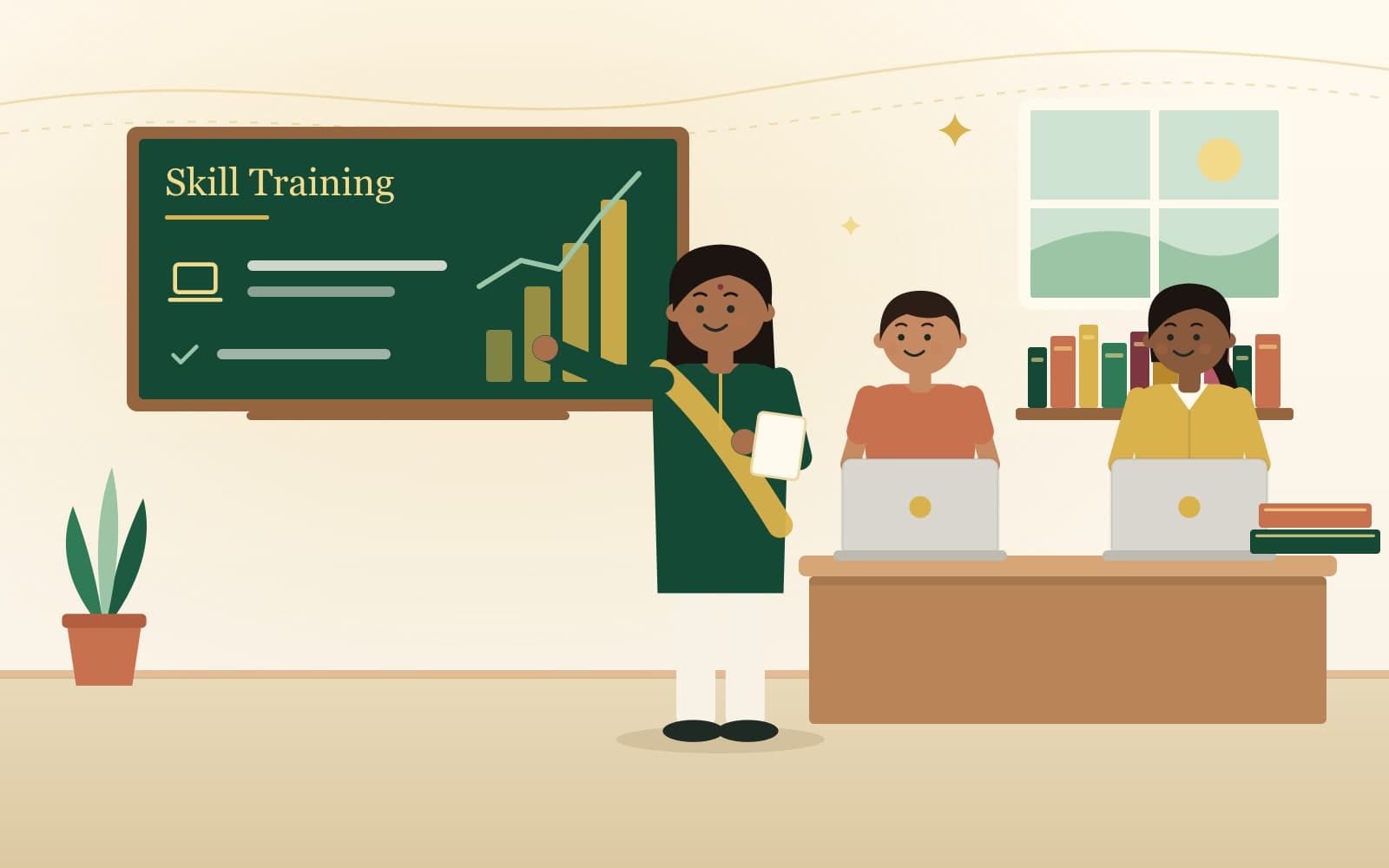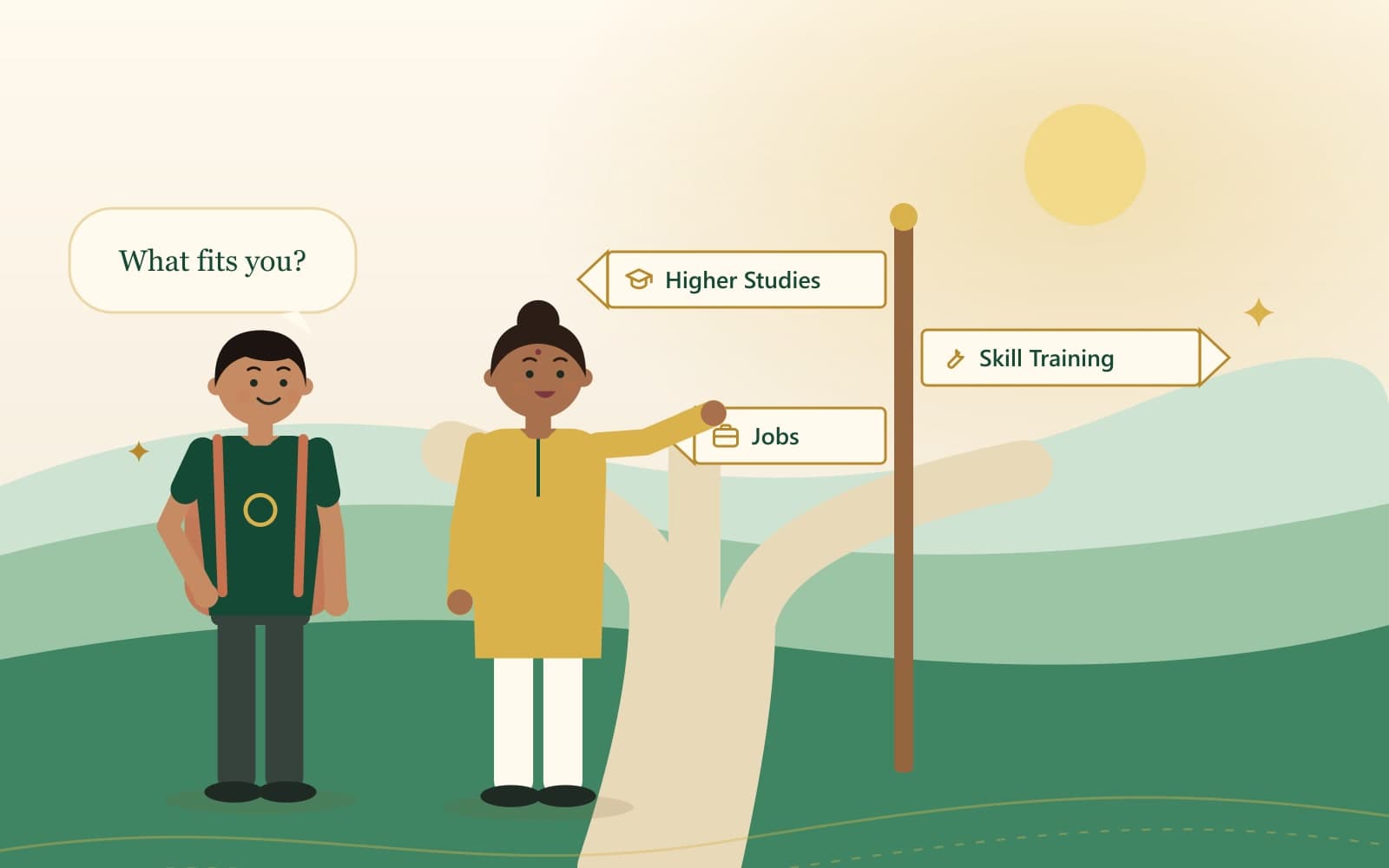

Education gives you knowledge and a foundation for lifelong learning. But when you apply for a job, employers also want to know: can you use that knowledge in a real workplace? Practical skills answer that question.
Knowledge and skills work together
Practical skills do not replace education — they complete it. A commerce student who can use spreadsheets, or an arts graduate who can draft clear documents and emails, turns classroom learning into something an employer can see immediately.
Skills worth building while you study
- Basic computer skills: typing, documents, spreadsheets, email and internet research.
- Communication: speaking clearly, writing simple professional messages, listening well.
- Workplace habits: punctuality, following instructions and taking responsibility.
- A job-oriented skill linked to the field you want to work in.
Learning by doing
Skills grow through practice. Short, structured courses with hands-on exercises help you learn faster than reading alone. Vocational training, such as Kaushal Vikas courses, is designed around real tasks, so you leave with abilities you can demonstrate.
If you are already studying, you do not have to choose between a degree and a skill. Many students build both at the same time, and some find part-time work that lets them earn while they learn.
Your next step
Choose one practical skill to build this month — such as spreadsheets, professional email writing or a vocational skill linked to your field — and practise it a little every day. Small, regular practice builds abilities that last.